37 min read
Tinder Events: Why the Dating App Is Getting People Offline
Tinder Events is taking online dating offline. We break down why Tinder is betting on real-world experiences and what marketers can learn from the shift.
Tinder Events: Why the Dating App is getting people Offline
Bad News: You might actually have to ask someone out in person again.
For a company that spent more than a decade making dating happen through a screen, Tinder's latest move feels almost backwards.
Tinder Events is designed to get people off Tinder.
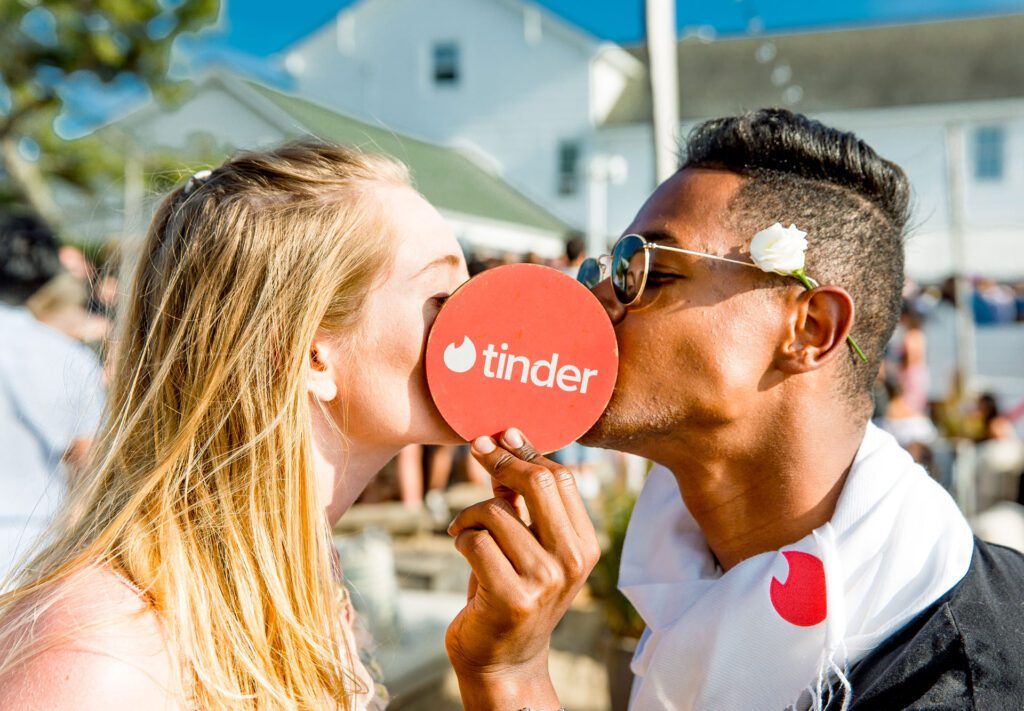
Users discover local experiences through the app, show up in person, meet people around a shared activity, and can continue connecting through Tinder afterward.
Think group runs. Ceramics classes. Game nights. Rooftop yoga. Coffee socials. Hikes. Pickleball.
In July 2026, Tinder announced that Events would expand from its Los Angeles pilot into nine additional U.S. and European cities, with 26 markets planned by the end of September.
At first glance, this looks like a strange product decision.
Dating apps make money by keeping people engaged with dating apps.
So why invest in helping them put their phones down?
Because Tinder may have recognized something more important than screen time:
The app was never supposed to be the destination.
It was supposed to get people into the room.
And Tinder Events attempts to fix what happens between those two moments.
What is Tinder Events?
Tinder Events is an in-app discovery feature that surfaces real-world experiences happening in a user's city.
Rather than Tinder building and operating every event itself, the company works with event organizers, ticketing platforms, and local partners. Users can browse experiences, mark themselves as interested, see other interested Tinder users, RSVP, check in, and continue matching with people who shared the experience afterward.
That last part is important.
This isn't Tinder replacing swiping with speed dating.
The app still matters.
Tinder has simply moved the order around.
Traditionally, online dating looks something like this:
Profile → Swipe → Match → Chat → Maybe meet
Tinder Events introduces another path:
Discover event → See who's interested → Attend → Meet naturally → Connect afterward
The digital layer remains.
But it doesn't have to carry the entire relationship from stranger to first date.
And that's where the strategy gets interesting.
Tinder is fixing the hardest part of Online Dating
Dating apps solved discovery extraordinarily well.
Before Tinder, finding another single person you might be interested in required considerably more chance, effort, or courage.
Tinder reduced that friction to a swipe.
But removing one friction point created another.
You matched.
Now what?
Someone sends “hey.”
Someone else responds three hours later.
You exchange eight messages.
Nobody knows when to suggest meeting.
One person disappears.
Another match replaces them.
The conversation dies.
The weakness isn't always the match itself.
It's the transition from matching to actually meeting.
Tinder Events gives users a bridge across that gap.
The event provides a reason to be there.
The activity provides something to talk about.
Other people reduce the pressure of a traditional one-on-one date.
And Tinder remains available afterward if someone wants to continue the connection without immediately exchanging contact information.
The platform hasn't abandoned its core product.
It has extended the customer journey beyond it.
“See the Room. Feel the Vibe. Then Swipe.”
One of the smartest elements of Tinder Events is that it reduces the stakes on both sides of the interaction.
Tinder's app lets users see who is interested in an event beforehand. According to Tinder CMO Melissa Hobley, users can then swipe on attendees afterward, helping reduce the pressure of direct rejection during the event itself.
That's a subtle product decision.
The company isn't asking Gen Z to suddenly abandon every digital behavior they've developed.
It's combining the advantages of both worlds.
Offline gives you context.
Online gives you control.
In person, you can see someone's energy, how they communicate, who they came with, whether you actually enjoy talking to them.
Then Tinder gives you a lower-pressure way to express interest later.
See the room.
Feel the vibe.
Then swipe.
That's much closer to how human attraction has historically worked than judging six photos and a bio containing “fluent in sarcasm.”
Tinder's bigger problem is “Social Atrophy”
The strategic thinking behind Events gets even more interesting when you look at why Tinder says it built the feature.
Hobley told Marketing Brew that Tinder's research with anthropologists, social psychologists, and other researchers pointed toward what she called “social atrophy” among younger users.
The idea is straightforward: Gen Z wants connection, but growing up heavily online — compounded for many by experiencing the pandemic during formative years — may have made some forms of spontaneous, face-to-face social interaction harder.
This doesn't mean an entire generation has forgotten how to speak to another human being.
But Tinder's own research suggests a genuine tension.
Match Group CEO Spencer Rascoff said nearly half of singles aged 18 to 29 in the company's research wanted shared in-person experiences with people who could become closer connections, while acknowledging that making the transition into real life can still feel difficult.
That's exactly the type of tension good products solve.
People want A.
Something is preventing them from reaching A.
Build the missing step.
Tinder Events isn't really selling events.
It's selling lower-friction participation.
The Los Angeles test suggests people want it
Tinder didn't immediately roll Events out everywhere.
It started in Los Angeles in March 2026.
The early numbers explain why the company is expanding.
According to Tinder, more than 60 events were featured during the LA pilot. Around 66% of eligible active usersengaged with Events, increasing to 71% among users aged 18–24. More than half of engaged users returned to the feature.
Activity-led experiences performed particularly well.
A 60-person candlelight ceramics class sold out within a day of the event partner promoting it, while Tinder also reported strong demand around DJ nights, game nights, creative classes, hikes, and group runs.
That's revealing.
People may not necessarily want another event explicitly marketed as:
SINGLES NIGHT: COME FIND A DATE.
That immediately raises the stakes.
A ceramics class where everyone happens to be open to meeting someone?
Different experience entirely.
The activity becomes social camouflage.
If you connect with someone, great.
If you don't, you still made a very questionable ceramic bowl.
Tinder isn't leaving Digital. It's expanding its Product Boundary
There's a broader business lesson here.
Companies naturally define themselves by the product they currently sell.
Dating app.
Social network.
Fitness app.
E-commerce store.
Streaming service.
But customers don't experience businesses in neat product categories.
They experience them as part of a larger goal.
Tinder's customer doesn't fundamentally want to swipe.
They want to meet someone.
Swiping is simply one mechanism Tinder built to help make that happen.
Once you look at the company through that lens, Tinder Events stops looking contradictory.
If the customer outcome is connection, then an offline event is completely inside Tinder's territory.
This is the difference between being product-led and being problem-led.
A product-led company asks:
How do we get people to use more of our existing product?
A problem-led company can ask:
What else prevents our customer from reaching the outcome they came here for?
The second question usually creates a much larger market.
It could also help Tinder's own growth problem
There is a commercial reason for the shift too.
Tinder isn't expanding Events from a position of unlimited growth.
Its monthly active users were down 7% year over year in the second quarter of 2026, according to comments from Match Group leadership reported by TechCrunch.
That makes Events more than an engagement feature.
It could become a reconsideration strategy.
People who are tired of traditional swipe-based dating may not be persuaded by another algorithm update.
But changing what Tinder itself feels like could bring some of them back.
Match Group's internal research found that roughly three in five people who don't currently use Tinder said events would make them more likely to consider using it. A similar share said Events could make connecting feel easier.
That makes the strategy much bigger than attendance.
Tinder doesn't need every user to attend a pottery class.
If Events changes the perception from:
“Tinder is endless swiping.”
to:
“Tinder helps me meet people.”
the feature has already done something valuable for the brand.
Tech companies are starting to sell the exit
Tinder isn't operating in isolation.
One of the stranger trends emerging across technology is that platforms built around digital engagement are increasingly talking about what happens after the screen.
Pinterest's 2026 brand work has explicitly encouraged users to take inspiration from the platform and then log off and do something in the physical world. The company even experimented with phone-free activations.
Products such as Brick go even further, selling a physical device specifically designed to block distracting apps and create friction between the user and their smartphone.
The irony is difficult to miss.
Technology spent years making access frictionless.
Now there's an emerging market for putting some of that friction back.
That's not because digital attention suddenly stopped mattering.
It matters enormously.
But endless attention isn't always the customer's desired outcome.
Pinterest users want to make the recipe.
Tinder users want to meet the person.
Productivity users want to finish the work.
Eventually, the screen has to hand the customer back to the real world.
The companies that understand that transition may build stronger relationships than the ones desperately trying to prevent it.
The customer journey doesn't end at Conversion
This may be the most useful marketing lesson from Tinder Events.
Marketers frequently optimize around the measurable digital moment.
Click.
Lead.
Download.
Sign-up.
Match.
Purchase.
Those events are easy to track, so businesses start treating them as the end goal.
They rarely are.
A restaurant booking isn't the experience.
A gym membership isn't fitness.
A CRM lead isn't revenue.
A Tinder match isn't a relationship.
The strongest businesses understand what happens after the metric they're optimizing.
Tinder spent years becoming exceptionally good at generating matches.
Now it's looking harder at what customers actually wanted those matches to become.
That's a useful question for almost any company:
Where does our product hand the customer off — and what breaks immediately afterward?
Sometimes the biggest growth opportunity isn't acquiring another customer.
It's fixing the gap after acquisition.
Activity is becoming the new social infrastructure
There's another consumer behavior shift underneath Tinder Events.
Traditional social environments have become harder for many people.
The office is more flexible.
Community organizations have weakened.
Church attendance has changed.
People move cities more frequently.
Much of everyday communication happens through screens.
At the same time, low-pressure activity communities have exploded in visibility.
Run clubs.
Pickleball.
Book clubs.
Ceramics.
Chess.
Dinner parties.
Fitness communities.
Axios recently described the broader growth of these low-pressure gatherings as “soft socializing” — environments where the activity provides a reason for strangers to share physical space without forcing intense interaction.
Tinder isn't inventing that behavior.
It's attaching itself to it.
And that's usually a stronger strategy.
Great companies don't always need to create new habits.
Sometimes they identify an existing behavior gaining momentum and build the infrastructure around it.
What marketers can learn from Tinder Events
Solve the next problem, not just the first one
Acquiring the customer may only solve part of their journey.
Look at what happens immediately after someone uses your product. That next friction point could become your next service, feature, or competitive advantage.
Don't confuse engagement with customer value
More screen time isn't automatically better.
If the customer gets what they wanted and leaves your product, that can still create loyalty.
The metric should support the outcome — not replace it.
Build around existing behavior
Tinder didn't invent run clubs, pottery classes, or game nights.
It recognized that its audience was already using them as social environments.
Joining an existing behavior is often easier than convincing customers to adopt a brand-new one.
Lower the emotional cost of action
Many products fail not because the functional process is difficult, but because the action feels uncomfortable.
Tinder Events lowers the psychological pressure around meeting strangers by giving people activities, groups, and a digital fallback.
That same principle applies to sales, onboarding, consultations, trials, and purchases.
Sometimes the best digital strategy leads offline
Not every business should maximize digital interaction.
Ask what your website, app, social presence, or advertising is ultimately supposed to cause in the real world.
Then optimize for that.
Tinder has come full circle
Tinder changed dating by removing much of the friction involved in finding someone.
Now it is confronting another kind of friction created by the digital dating era itself.
People can find each other.
They can match.
They can message.
But eventually, someone still has to walk into the room.
Tinder Events makes that room part of the product.
And that's why this is more interesting than another dating feature.
It's an example of a digital company recognizing that the ultimate value of its platform might occur outside the platform.
Tinder spent years teaching people to swipe.
Now it's helping them meet.
That's not Tinder abandoning its original idea.
It's Tinder finally following the idea all the way through.
At Nitroger, we help businesses identify the gaps between customer attention, conversion, and actual growth. Because sometimes the biggest opportunity isn't bringing more people into your funnel — it's fixing what happens after they arrive.